
Why Stretching Matters as You Age
Stretching is often one of the first things people skip when they are short on time. Once a workout is finished, it can be tempting to pack up and move on with the rest of your day.
But as we age, maintaining a healthy range of motion becomes increasingly important. Regular stretching can help support mobility and make everyday movements feel easier, whether you are reaching, bending, walking, exercising, or simply moving through your daily routine.
Maintain Your Range of Motion
Range of motion refers to how freely and comfortably your joints can move. When muscles become tight, movements like reaching, bending, or turning may start to feel more restricted.
Regular stretching can help maintain your range of motion over time, making it easier to move during exercise and throughout your day. Keeping your muscles and joints moving through a healthy range can also support the activities you want to continue doing as you age.
Support Everyday Activities and Exercise
Mobility plays a role in many everyday activities, including:
- Reaching into a cabinet
- Bending down to tie your shoes
- Turning to look behind you
- Getting in and out of a car
- Completing household or yard work
Stretching can also support movement during exercise. Tightness in areas like the hips, ankles, shoulders, or chest may make certain exercises more difficult to perform comfortably.
Maintaining mobility can help you stay active and move more easily as you age.
Ease Feelings of Tightness
Sitting for long periods, repeating the same movements, or completing a challenging workout can leave your muscles feeling tight.
Gentle stretching can help ease that feeling of tightness and add a little more movement to your day.
Remember, stretching should feel like a gentle pull, not pain. Never force yourself farther into a stretch than feels comfortable.
Should You Stretch Before or After a Workout?
Different types of stretching are better suited for different points in your workout.
Before Your Workout
Start with five to ten minutes of light activity to warm up your body. Then use dynamic movements that take your muscles and joints through a comfortable range of motion, such as:
- Arm circles
- Controlled leg swings
- Shoulder rolls
- Marching in place
- Gentle torso rotations
These movements can help prepare your body for exercise.
After Your Workout
Static stretching is generally better suited for the end of your workout, when your muscles are already warm.
Hold each stretch for approximately 20 to 30 seconds while breathing normally. Focus on the muscles you used during your workout and any areas that tend to feel tight.
How to Stretch Safely
Keep these simple guidelines in mind:
- Warm up before deeper stretches.
- Move slowly and avoid bouncing.
- Stretch both sides of your body.
- Breathe normally.
- Stop if you feel sharp or increasing pain.
- Choose stretches that fit your current abilities.
If you have an injury, joint replacement, balance concern, or ongoing pain, talk with a qualified health or fitness professional about which movements are right for you.
Make Stretching Part of Your Routine
Stretching can be a simple way to support mobility and movement as you age. When combined with strength training, cardio, and balance work, it becomes part of a well-rounded fitness routine.
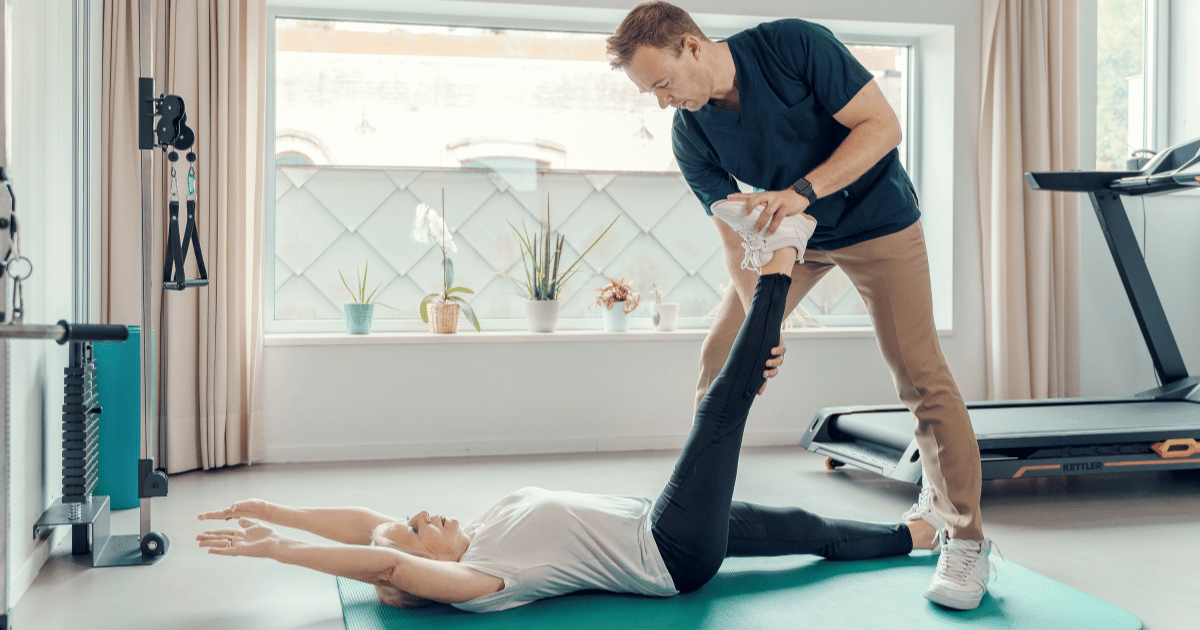
At Prescription Fitness, our trainers can incorporate stretching and mobility exercises into your personalized program based on your needs.
Ready to get started? Learn more about our free Fitness & Movement Evaluation.
Related Posts



Click on a Subject to Learn More